
When Execution Becomes Easy, Judgment Becomes Everything

Matt Beynon
Recently we held a webinar about the role of expert judgment in AI-accelerated engineering. During the webinar, we conducted a poll to see what the biggest fears or pain points were for software teams in this new age. Interestingly, the results were all over the place!
As I thought about it more, it honestly tracks because AI effectively hands teams a new capability without changing how they think—how a team thinks determines how they might implement this new superpower and where it causes new problems.
The Bottleneck Has Moved
A few years ago, code was the bottleneck. Even when you had a great idea, a clear problem (the hardest part), and a willing team, you still end up waiting. Sprints, reviews, dependencies, merge conflicts—speed was the constraint.
That constraint has largely dissolved. The pace of delivery has shifted in ways that would have seemed implausible two years ago. At Tech9, we have developers who have moved from writing code to directing AI to write it—then reviewing the output. Teams that once needed five or six people to build a system are doing it with one or two. A team of one has become a real delivery unit.
That speed has introduced a new, interesting problem: speedy misdirection. Speed used to surface problems slowly, and that slow pace allowed for mid-stream course correction. Now a team can go super far in the wrong direction before anyone notices. It’s true that the time cost of that side-quest is less than it used to be (and failing forward is always important) but there are also new symptoms along the way, including a false sense of security in that wrong direction and reduced rigor on understanding and defining the problem. That is where I see teams taking damage.
Aesthetic Bias Is the New Scope Creep
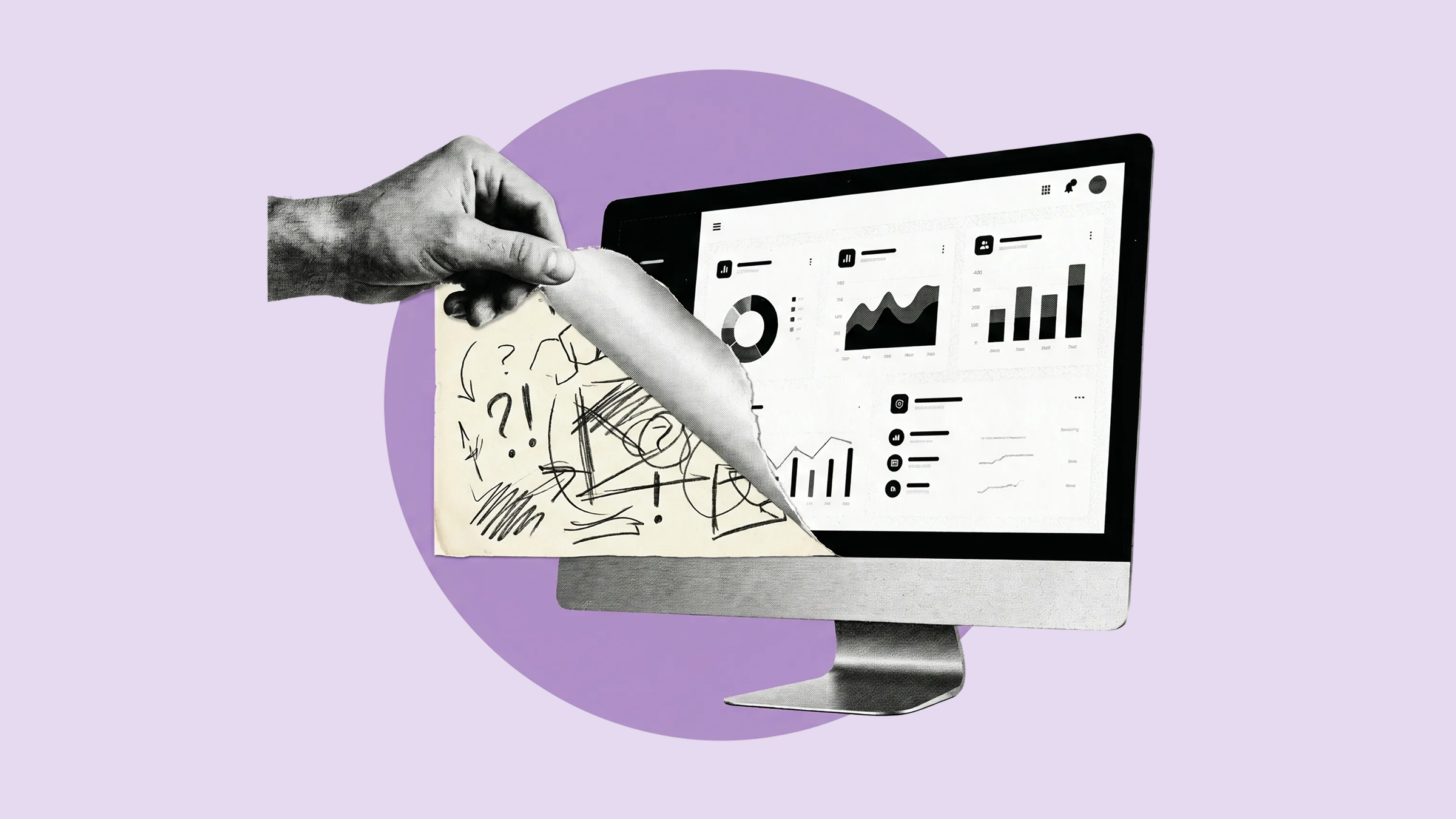
In the webinar, I walked through a dashboard built in under an hour using AI. It looked great—clean data visualizations, modern layout, the kind of output that makes a stakeholder say "let's ship it."
It was a C+ solution.
The user it was designed for—call her Sarah—primarily used the tool to resolve unresolved data requests. The old interface put Sarah directly on that page. The new dashboard routed her through an overview she had no use for. Her time on task got worse. The product looked better and performed worse.
AI-generated interfaces are prone to inherently carry aesthetic bias. They look done. They look polished. That quality creates real pressure to move on—and moving on is precisely when the gap between 'looks right' and 'actually works' goes unexamined.
The Four Checkpoints That Change What Gets Built
The agentic delivery flow has natural pressure points—stages where moving too fast without the right input creates problems that compound downstream. Four of them consistently determine whether a product holds up:
- Problem definition.
The real question is whose problem is being solved, and whether it's been framed accurately. A domain expert or experienced product owner at this stage catches the gap between what someone requested and what actually needs to be built. Everything downstream inherits this framing. - Reviewing AI output.
Before refinement begins, someone with real product or design experience should ask a harder question than 'does this look right?'—specifically, does this solution fit the way the user actually works? A median output can look polished while quietly missing the point. - Prompt refinement.
AI fills in assumptions when context runs thin. An expert can identify those assumptions and correct them before they calcify into scope. This is where most quiet drift originates. - Pre-release review.
Design acceptance testing—does the built product match the design intent?—is the kind of check automated testing consistently underserves. Thirty minutes with the right person gives you the chance to catch issues that would reach users.
AI Compressed the Hours. The Expertise Still Matters.
What changed about expert involvement in an agentic delivery model is how much time it actually requires per deliverable. It is far less than before.
We used to open a new product engagement with a six-week design phase: scope definition, user experience mapping, low-fidelity prototyping. The same work now takes one week (sometimes even a couple days or hours). The expert doing that work brings the same judgment and the inputs they're producing are just as valuable. They're simply doing more of it in less time, and feeding better context into a system that can execute faster.
The teams producing durable work now have figured out where in the process expert judgment creates leverage and protect those moments even as the pace around them accelerates.
Roles the Agentic Team Can't Compress Away
When I think about what roles matter most in a high-velocity software team, I keep landing on the same two.
The creative builder understands user needs, frames problems accurately, and knows how to shape a solution rather than just generate one. Product designers are well-suited to this by training—creativity, in one useful definition, is the ability to draw analogies from past experience and apply them to new problems. That's the core skill this role demands. At Tech9, we call this role the Product Lead.
The expert systems architect reviews what's been built for security, maintainability, scale, and edge cases. The build phase in agentic delivery moves fast. The review phase—data model performance, architectural decisions, stress conditions—is where senior engineering judgment determines whether that speed holds up over time. We call this the Engineering Lead.
These two roles require different enough expertise that they rarely sit within the same person. Compressing either one tends to surface costs downstream, after the train has left the station.
Some Questions Worth Sitting With
Look at what you’re shipping today. Are you being tricked into thinking that good looking means good working? Are you subjecting your users to poor quality?
Do you trust the human beings that are clicking PUBLISH, or are you trusting in aggregate aesthetic solutions from AI?
And then…
Where are the moments that require real judgment, not just execution? Who owns those moments? Are they present when it counts?
Sometimes the honest answer to that last question is “no”—the experts are available in theory, but the cadence of their review has fallen behind the pace of AI delivery. That gap tends to get filled with assumptions, and assumptions have a way of becoming expensive.
Expert touchpoints provide high-leverage course correction at the right moment, and produce better outcomes than recovering from the wrong ones. That's the case for slowing down and it has nothing to do with going slower overall.
If you're not sure where your expert checkpoints are, or whether the right people are involved, Tech9 can help.

